
Anemones by Colleen Goy
24TH APRIL 2026 - ASU #522
There is something quietly theatrical about the anemone.
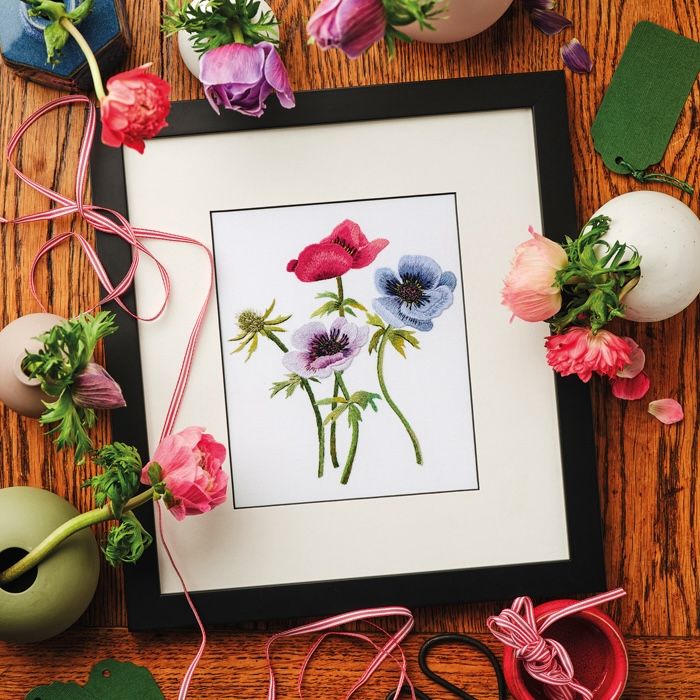
Unlike the rose, which announces itself with layers of petals and perfume, or the peony, which arrives in a blowsy, extravagant rush, the anemone is spare and striking - a ring of open, silky petals arranged around a centre so dark it reads almost as black.
It is a flower that knows exactly what it is doing and it's also a flower that presents itself perfectly as a threadpainted muse.
Colleen Goy has long demonstrated an exceptional instinct for matching technique to subject - it is what makes her work so consistently satisfying to look at and to stitch.
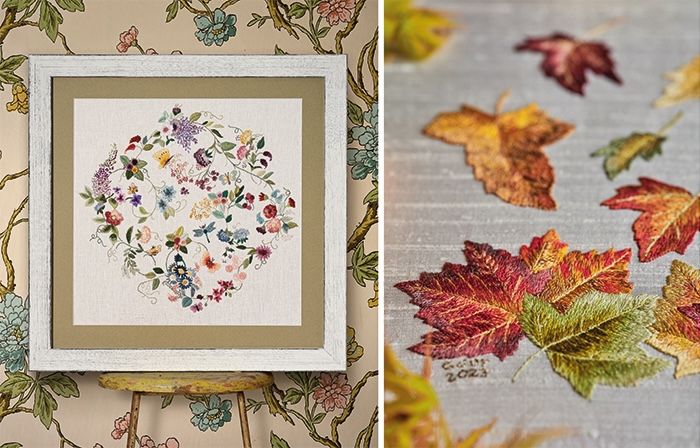
L – Nature’s Delight | R – Changing Colour
With Anemones from Inspirations magazine issue #130, she turns that instinct onto one of the garden's most dramatic inhabitants, and the result is everything you would hope for.

The design brings together three blooms - one a deep, jewel-bright crimson, one a soft and dreamy periwinkle, one a dusky, watercolour lilac - rising from a tangle of lacy green stems and foliage, accompanied by a single spent flower head, its petals gone and its sepal-ringed centre laid bare.
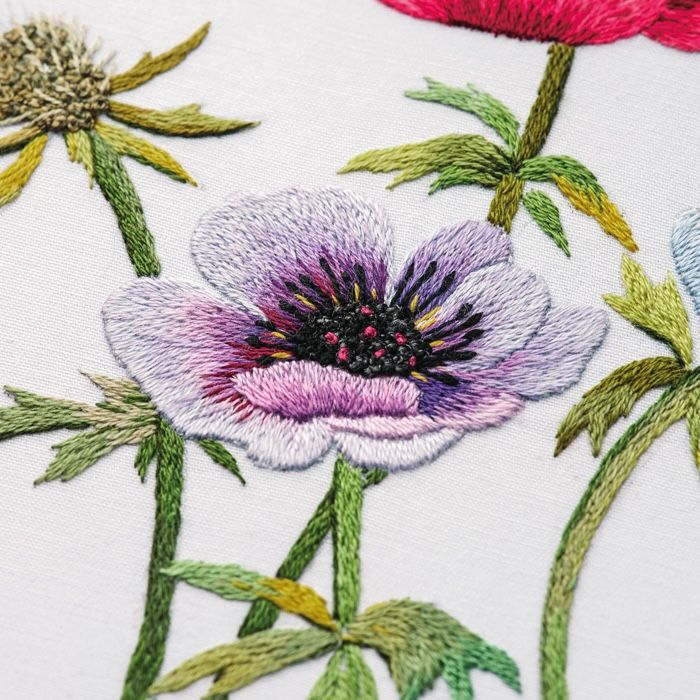
It is a composition that feels at once botanical and painterly, the kind of arrangement you might find pressed between the pages of a Victorian flower album or hanging framed in a particularly well-curated sitting room.
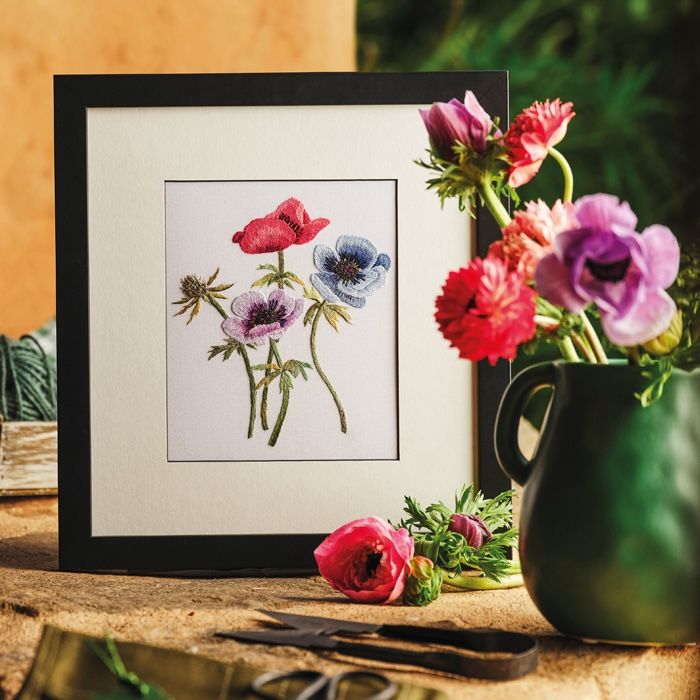
At 15cm × 13.5cm wide (6" × 5¼"), it is relatively intimate in scale, yet there is nothing small about its ambition.
The technique of threadpainting is ideally suited to a subject like this. Laying long and short stitches in carefully sequenced colours, each row interlocks with the last, building depth and tonal gradation one thread at a time.
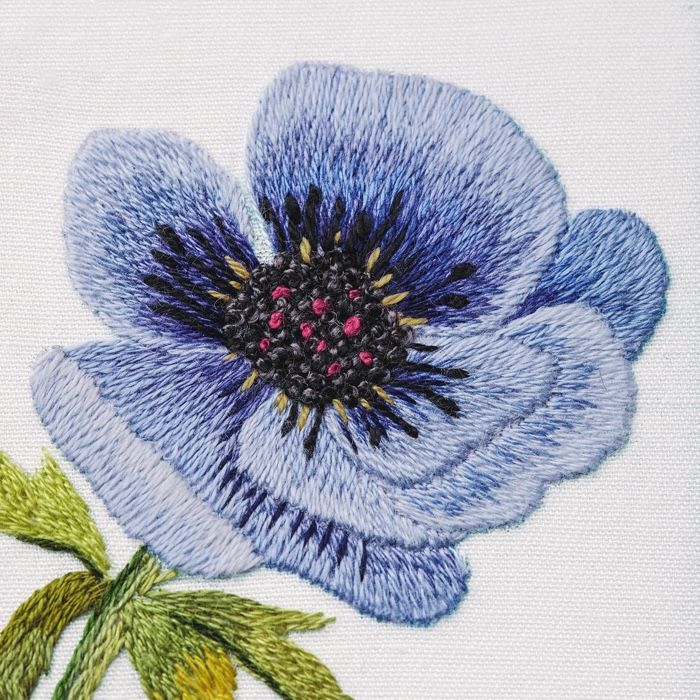
The result, when done well, has the luminosity of paint without ever pretending to be anything other than thread. And Colleen does it extraordinarily well.
The palette she has assembled for these three blooms runs to 38 different thread colours - not because the design is complicated for complexity's sake, but because the anemone demands it.
Consider the periwinkle bloom alone: its petals move from ultra light antique blue at the outer edges through light and medium cornflower blue, into dark cornflower blue and dark royal blue at the base of each petal, with subtle interspersed accents shifting the tone between rows.
That is the work of a colourist, not just an embroiderer.
Each petal is outlined first in split stitch before being filled with long and short stitch - a structural approach that keeps the edges crisp while allowing the interior colours to blend with complete fluidity. Anemones is the kind of project that rewards patience in the most satisfying possible way - one where the act of building colour gradually, stitch by careful stitch, is half the pleasure of the finished piece.
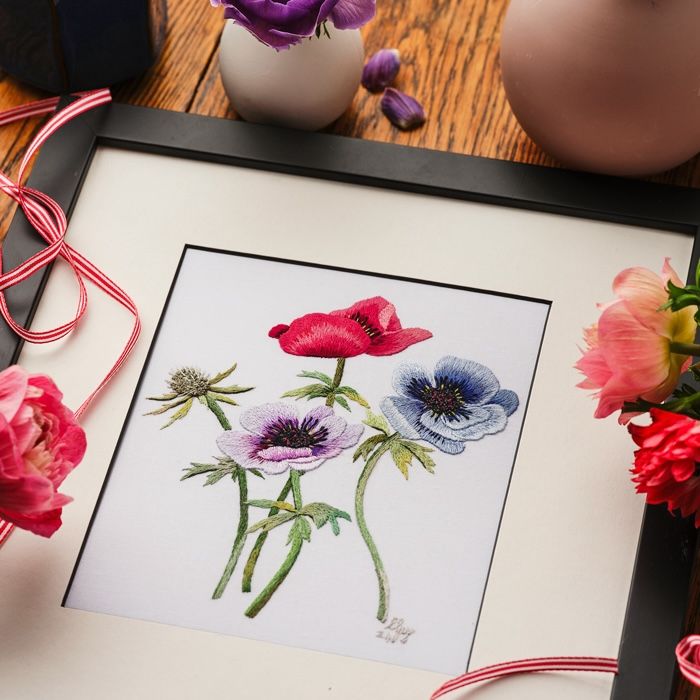
Ready-to-Stitch kits for Anemones are now available to purchase using the link below. The kit includes all the materials you need to re-create this stunning piece just like the original and even has the design pre-printed onto the fabric so you start stitching the moment it arrives.
