
Inspirations Magazine Behind the Scenes Part 3 | Articles
14TH NOVEMBER 2025 - ASU #502
As we continue our multi-part series and go behind the scenes to explore the different steps involved in creating each issue of Inspirations magazine, it’s time to find out how the articles at the front of each issue are created…
Part 3 - The Articles
Inspirations magazine is many things to many different people. For some it’s the ultimate eye candy offering an expose of the world’s most beautiful needlework in glorious high-definition detail.
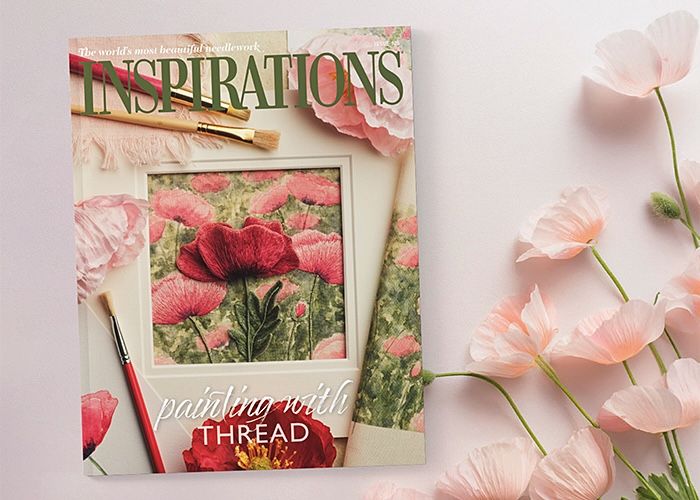
For others it’s a treasure trove of projects you can re-create, complete with detailed step-by-step instructions, so beautiful and splendid to the eye, one can hardly believe it.
Then there are those who appreciate the magazine mostly for the articles.
And who could blame them? Where else can you learn about such fascinating stories and inspiring articles about the happenings in needlework the world over?
The talented woman behind these articles is our very own Ansie van der Walt and recently our All Stitched Up! team caught up with Ansie to discover more about how she does what she does:
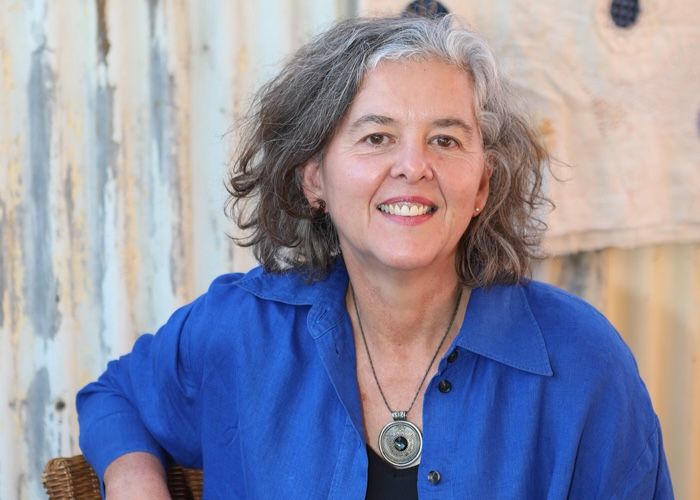
Hi Ansie, thanks for making the time to talk to us this week… let’s start at the beginning - when did you first start writing for Inspirations magazine?
‘My first article was published in Inspirations issue 79 back in 2013 and my first Loose Threads piece was published in issue 81. My 50th Loose Threads will be published in issue 130, and my 100th article will be published in issue 131.’
Wow! That’s some impressive milestones, and yes, we should also remind everyone about ‘Loose Threads’ - your own editorial column at the back of each issue of Inspirations magazine.
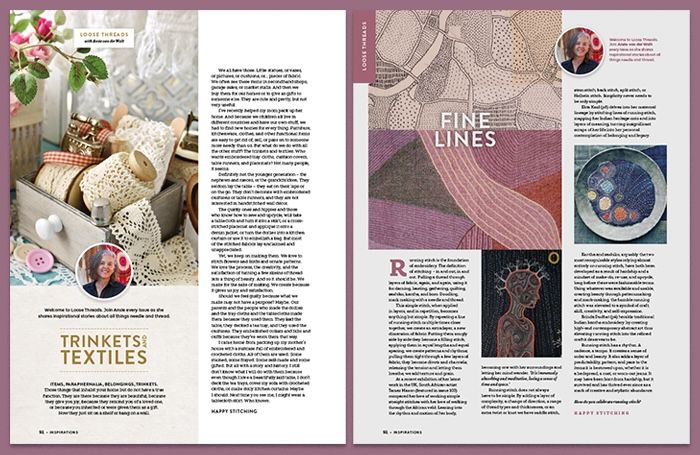
Where and how do you find all these interesting subjects, people, places and stitches to write about…
‘I started writing before Instagram was really a thing. Back then I followed blogs, the early version of Facebook, and other publications to find inspirational embroidery.
I’ve been lucky enough to live in different countries and travel a lot, so I became interested in cultural textiles and how people express their identity through stitching. I also buy a lot of textile related books and visit galleries and museums.’
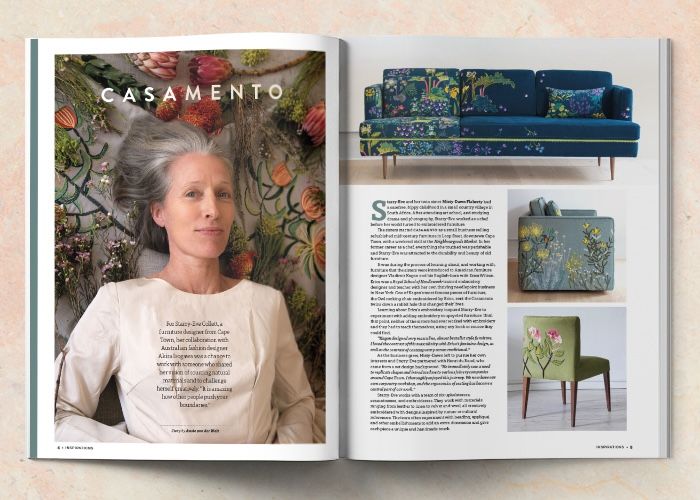
‘Lately, I find many people through Instagram, and algorithms help a lot to direct me towards creative needlework. I also follow several textile art publications, organisations, and galleries to stay up to date with exhibitions, etc.
I’m always looking for a certain ‘magic’ factor when discovering people, which also applies if anyone approaches me with ideas for inclusions.
The most important part for me is that there has to be a story. Something that triggers me to find out more, to ask questions, and to explore a stitcher’s motivations, inspirations, and artistic development.
It is hard to define, but I know it when I see it.’
Once you’ve found someone or something that has that ‘magic’ factor that you’re seeking, what happens next?
‘In my initial contact, I introduce myself and the publication, ask if they are interested in being interviewed and featured in the magazine, and if they can provide images. I then read everything I can find about them online and in print to give me an idea of who they are and how they work.’
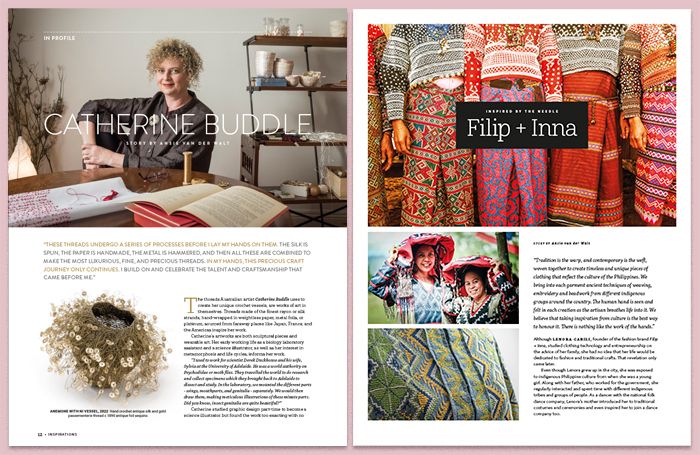
‘I compile a list of questions to probe deeper and find the story behind the work. I send the questions by email, with the option of either giving me a written reply, or we arrange a time to speak on Zoom.
I prefer if people write because it gives them time to contemplate their responses and give more considered answers. If we talk, they often feel ‘put on the spot’.
Once I have all the information, I build a story. Sometimes it feels like baking a cake.Once I have all the information, I build a story. Sometimes it feels like baking a cake.
I have all the ingredients, now I have to decide what I am going to bake - a layer cake, cupcakes, or a delicious baked pudding. Playing around with all the story elements to get the final article is fun, but also quite stressful.
I take the responsibility to represent the artist and their work in a truthful and respectful way very seriously. I always strive to ensure that what I produce enables the reader to really ‘see’ them.’
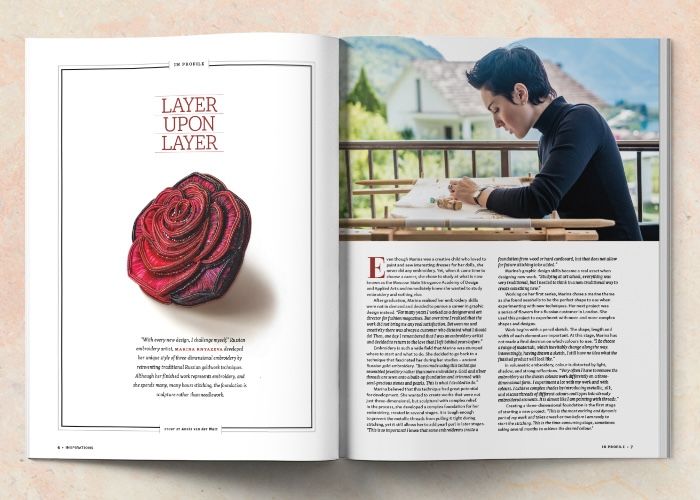
‘Once the article is written, I send it through to the publication team who work their magic in creating a beautiful article on the page.’
We can certainly attest to all your diligence and background research as every article really does help us ‘see’ your subjects. And that’s just the words you write! We have to ask, how is it that every article also features the most spectacular images?
‘It is the most important part of the article, and one of the deciding factors in whether I will write the article or not.’
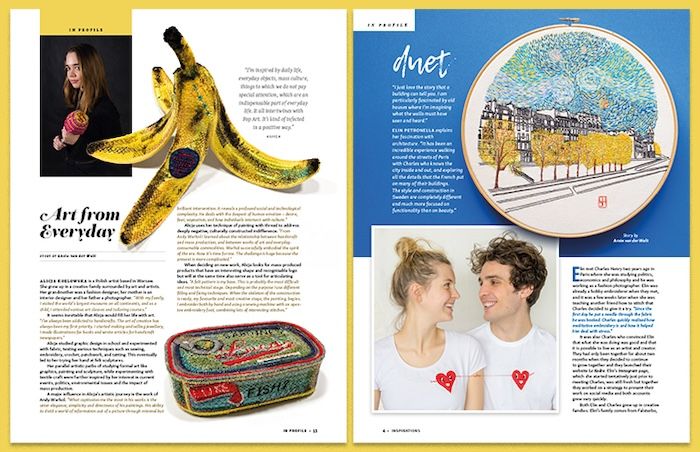
‘Most working artists have a folder of ‘media’ images that they can share, and most people also have an active social media presence, so they are adept at photographing their work, work process, and inspiration etc. and don’t mind sharing those images.
It is often the fact that they already have excellent images that attracts me in the first place. I make a point of including images showing the person and the process, and not just the final piece.’
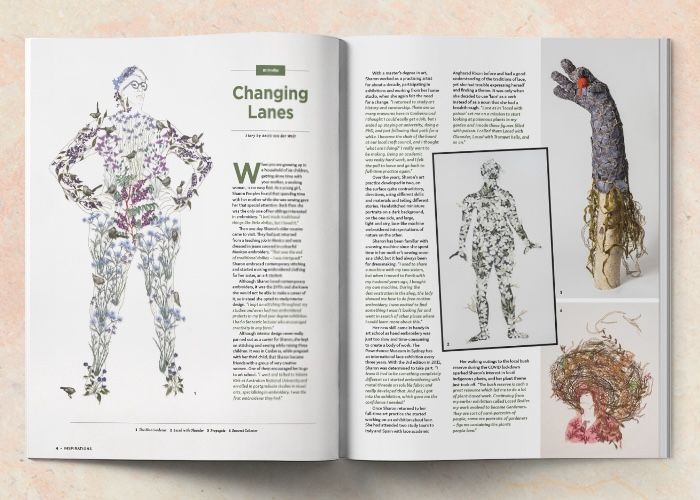
Looking back over all the articles you have written and all the incredible people you have met, what are some of the most memorable moments for you?
‘I feel very privileged to be able to write about creative needlework artists.
I am grateful that they share their stories with me and trust me with their thoughts, dreams, and inspirations.
In issue 103, I wrote an article about Tamar Mason, a South African embroidery artist. She lives on a beautiful piece of land not far from the Kruger Park and close to the town where my mother lives.
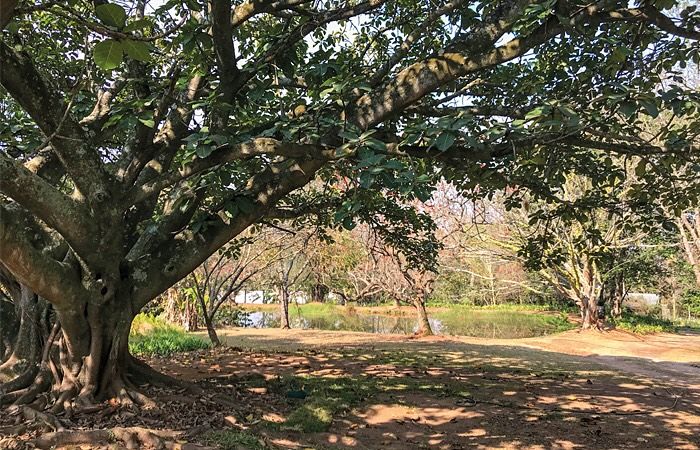
I arranged to interview her during a trip home to visit mum. It was the first time we met, but we had an instant rapport. We sat on their ‘stoep’ listening to the sound of the African bush. She mentioned how she struggles to be taken seriously as an artist because she works with embroidery instead of painting or sculpture.’
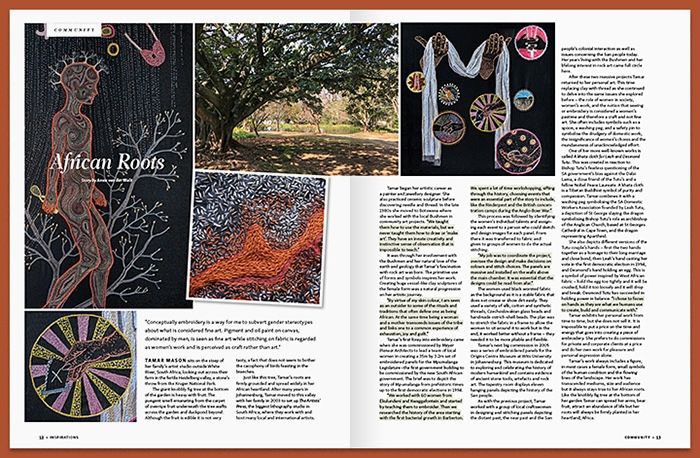
‘Once the article was published, she was approached by a gallery in the UK who bought two of her works and arranged an exhibition for her. She has since had several works exhibited and sold internationally, as well as received several commissions. I visit her every time I go there to see my mum and now consider her a friend.
What I like about this article (other than Tamar’s amazing work) is her generosity to share, but also, because I was there, I could bring the environment into the story, including a photo of the fig tree under which we sat.’
‘The articles I feel proudest about are the ones that tell the stories of women who have overcome adversity through embroidery. In many cases these women use stitching as a form of language and storytelling to find healing from trauma, to gain economic independence or to create social upliftment and empowerment.’
Thank you, Ansie, for enlightening us as to your process. Not only do we love reading every story you bring to light, we also now better appreciate the dedication and commitment you bring to each article.
Join us next week for Part 4 of our Inspirations Magazine Behind the Scenes series